


Table of contents
By 2025, language models (LLMs) such as ChatGPT, Google AI Overviews, Bing Copilot and similar. are no longer just assistants: they have become the main interface between the user and the information. It is no longer enough to rank well on Google; if your content is not optimised to be citable by these toolscan simply disappear when users make decisions.
This approach, known as Generative Engine Optimisation (GEO)redefines the landscape of the SEOThe aim is to ensure that your content is retrievable by AI, comprehensible, reliable and directly quotable in the responses generated.
To find out more about how to adapt your business to this new era of local search driven by IAfrom the Eiji Group Agency we recommend you consult the following practical guide:
Practical guide: how to prepare your company for local search with AI
How is GEO different from traditional SEO?
Traditional SEO
GEO (Generative Engine Optimisation)
SEO: Seeks to improve ranking in search engines such as Google through keywords, links and authority.
GEOFocuses on getting your content integrated and cited by AI in generated responses.
SEO: Clicks matter more than presence within the generated content.
GEOMention or citation within the AI is more valuable than a click. Visibility is measured in mentions, not just traffic.
SEO: Content is usually designed for humans and classic search engines.
GEOContent must have clear structure, data density and semantic cues for the AI to understand and use.
Key strategies to optimise your content according to GEO
-
Expand your semantic footprint
Create content that addresses related topics in a comprehensive and in-depth manner. This not only enriches your site, it also increases the chances that AI will choose you as a relevant source. -
Increases fact density
It includes statistics, specific examples, verified data and sources. The more factual and structured it is, the more likely it will be that a IA cite it as a reference. -
Clear and modular structure
Use headings, listings, FAQs and concise paragraphs. This makes it easier for LLMs extract relevant fragments quickly. -
Optimise your structured data
Use markup such as FAQ, How To or product data. You can also include files such asllms.txtto guide the access of AI tools. -
Get mentions from reliable sources
Articles in reputable media, directories or third-party studies increase your credibility and brand signals for LLMs.
How to measure GEO's impact?
Forget traffic and impressions as the only indicators. Here are some more useful KPIs to measure your real presence on generative platforms:
-
AI Visibility Rate (AIGVR)frequency with which your content is cited by LLMs
-
Citation Rate: percentage of responses generated that mention your brand or content
-
Content Extraction Rate (CER)How often is your content extracted for use in responses?
-
Conversion from AI responseif users take action after receiving a response that includes your content
-
Log analysischecks the traffic logs on your server to identify when your content is being processed by AI (data that is normally collected by Google Analytics or GA4 not shown).
Why is it vital to adopt GEO now?
-
More from the 50% of Google searches now show AI-generated answers, drastically reducing clicks to websites. Users no longer see your page; if they do not appear as a cited source.
-
Companies are already adopting GEO within their core strategies, and some CMSs such as Wix offer specific tools such as AI Visibility Overview to monitor your performance against AI.
-
This is a strategic and urgent transformation: continuing to rely solely on traditional SEO can put your brand off the radar of users.
How do we know that this technology is being used?
Google has a patent, Patent US11769017B1 which details how Google retrieves information using neural networks and bases it on the generative summaries in web content.
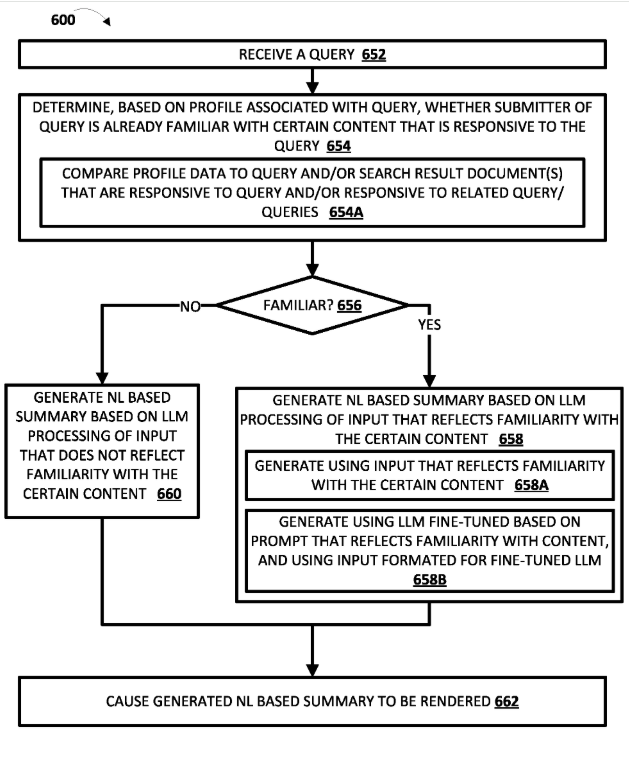
Other patents on the classification of paragraphs ( the patent US20190372508A1) and the generation of answers based on the user's context also support the idea that Google optimises at the paragraph and entity level, not just by page or keyword.

The GEO does not replace SEO: it complements it. It adds layers of strategy to ensure your content is discovered, understood and cited by AInot just rank well. If you want your brand to be at the heart of the responses generated by these AI platforms, now is the time to adapt.
SEO Case Study with AI: A company that sells and distributes machinery for the hotel and catering industry
| Metrics | Formerly | Then | Improve |
|---|---|---|---|
| Monthly organic traffic | 8,500 visits | 34,200 visits | 🔺 +302 % |
| Keywords in Top 10 | 120 | 480 | 🔺 +300 % |
| Organic budget requests | 35/month | 140/month | 🔺 +400 % |
| Cost per lead (CPL) | 34 € | 11 € | 🔻 -67 % |
| Revenue attributed to the SEO channel | - | +178 % |
🗣️ Customer testimonial
“Thanks to the use of AI applied to SEO, we not only improved our positioning, but we learned to better understand our customers. Today, organic traffic is our main sales channel”.”
- Maria, Marketing Manager