
#1 - Exact Match Domain
Exact match domains, or EMDs as they are known, are used to classify very easily.
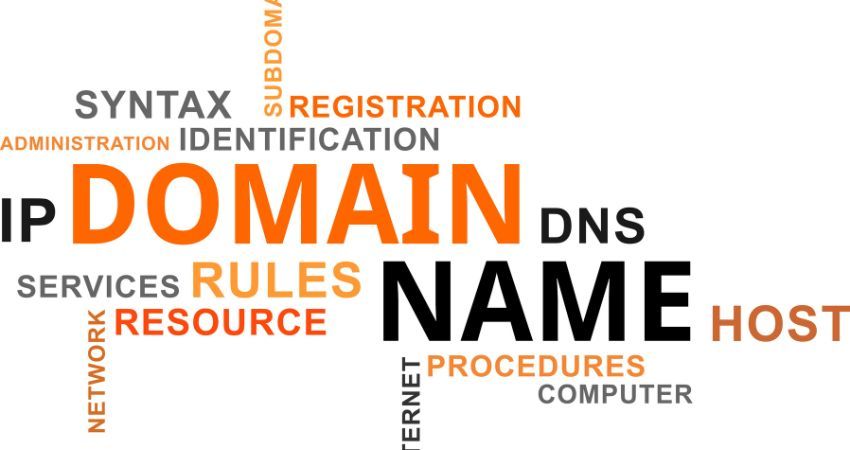
In case you don't know what it is an EMD domainI will explain it to you with this visual example:

However, Google cracked down on this with the EMD update .
You still get a small amount of benefit from an exact match domain. But you now have an extra layer of quality ( patent ) to please your website...
So, thanks to the EMD update, it's all better now.
- Negative domain ranking factors

#1 - Private Whois data
Having private Whois data alone is not a problem.
Matt Cutt originally suggested that private Whois data can be combined with other factors such as a negative signal.
But John Mueller recently clarified that it is OK to use it, especially in Europe. Private whois data is certainly used to identify patterns in blog networks, so pay attention to this!
#2 - Whois owner penalised
I can't find any official Google reference for this...
But there are a couple of examples where it appears that the owner is penalised of Whois.
Admittedly, the examples I have seen were extreme examples of abuse by 2 known SEOs and Google removed all web properties, whether they were abused or not.
However, this is far from being officially confirmed.
#3 - Country TLD extension
Where the cTLD will count as a negative signal is if you have an English domain but are trying to rank it in the Russian market. But the domain extension alone is not enough.
If you place Russian content on an English domain, it will be ranked in Russia.
#4 - Domain parked
If you have a parked domain, Google will actively remove it from its index after the update of parked domains.
#5 - Same URL parameters and same shared hosting
Two domains that are on shared hosting and have the same URL parameters, Google will assume they are the same. Make sure you have different URL parameters to avoid this.
#6 - Change hosting provider
The reasons for changing hosting provider may outweigh this negative factor.
But However, you should be aware that when you switch providers, Google will reduce temporarily your tracking frequency.
This is because it cannot yet determine what load the server can handle.
#7 - 503 Misuse of the State
If it maintains a state 503 for a few days, Google may think that the website will not work again. They will also reduce the crawl rate.
Tracking will then stop in full if a robots.txt file request is returned 503.
#8 - Google Test Zone
Newly launched websites on new domains may experience a temporary rating suppression known as a “Google Sandbox effect“ .
The Google Sandbox is a temporary filter that Google places on new web pages for a period of time. the first 3 to 6 months or more.
Regardless of the SEOThe website will not rank well for keywords during this time.
While Google has never formally confirmed the Google test environment, many SEO have conducted independent tests and found evidence to support this.